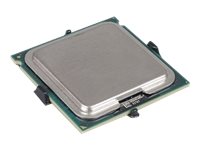
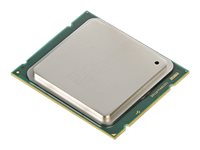
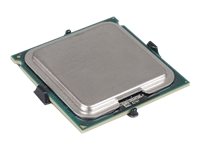
Cuadro comparativo y opiniones de los productos Intel Core i7 Extreme Edition 3920XM (3rd Gen) y Intel Core i7 3520M (3rd Gen). Compare el rendimiento general, el número de núcleos e hilos, la memoria caché, la velocidad, la eficiencia energética, las dimensiones, la compatibilidad de zócalos y otras especificaciones y características clave para simplificar la elección de su CPU perfecta. Nuestro objetivo es facilitar tu decisión, mostrándote las principales diferencias entre los productos y así encontrar el procesador que cumpla con tus expectativas.
| GENERAL | Intel Core i7 Extreme Edition 3920XM (3rd Gen) | Intel Core i7 3520M (3rd Gen) |
|---|
| Tipo de producto | Procesador (móvil) | Procesador (móvil) |
|---|
| PROCESADOR | Intel Core i7 Extreme Edition 3920XM (3rd Gen) | Intel Core i7 3520M (3rd Gen) |
|---|
| Tipo | Intel Core i7 Extreme Edition 3920XM (3rd Gen) | Intel Core i7 3520M (3rd Gen) |
|---|
| ARQUITECTURA |
|---|
| Cantidad de procesadores | 1 | 1 |
|---|---|---|
| Zócalo de procesador compatible | PGA988 Socket | PGA988 Socket |
| Proceso de fabricación | 22 nm | 22 nm |
| Potencia de diseño térmico | 55 W | 35 W |
| Especificación térmica | 105 °C | 105 °C |
| Revisión PCI Express | - | 3.0 |
| Configuraciones PCI Express | - | 1x16, 2x8, 1x8+2x4 |
| Cantidad de carriles PCI Express | - | 16 |
| Características | Tecnología SpeedStep mejorada, tecnología Hyper-Threading, capacidad de ejecución de bits de desactivación, tecnología de virtualización Intel, tecnología Intel 64, tecnología Intel Trusted Execution, extensiones SIMD de transmisión 4.1, extensiones SIMD de transmisión 4.2, acceso rápido a memoria Intel, acceso a memoria Intel Flex, Intel Turbo Boost Tecnología 2.0, tecnología inalámbrica WiMAX 4G, tecnología Intel My WiFi, tecnología antirrobo Intel, extensiones vectoriales avanzadas de Intel (AVX), nuevas instrucciones Intel AES (AES-NI), tecnologías de monitoreo térmico, tecnología de virtualización Intel para E/S dirigida ( VT-d), tecnología Intel vPro, estados inactivos | Enhanced SpeedStep technology, Hyper-Threading Technology, Intel Virtualization Technology, Intel 64 Technology, Intel Trusted Execution Technology, Intel Turbo Boost Technology 2.0 |
| RENDIMIENTO |
|---|
| Número de núcleos | Cuatro núcleos | Doble núcleo |
|---|---|---|
| Número de hilos | 8 hilos | 4 hilos |
| Velocidad de reloj (frecuencia) | 2.9 GHz | 2.9 GHz |
| Velocidad Turbo máxima | 3.8 GHz | 3.6 GHz |
| Velocidad del bus | - | 1600 MHz |
| Computación de 64 bits | Sí | - |
| MEMORIA CACHÉ |
|---|
| Caché | 8 MB | 4 MB |
|---|---|---|
| Detalles de la memoria caché | L3 - 8 MB | Smart Cache - 4 MB |
| Tamaño instalado | 8 MB | 4 MB |
| GRÁFICOS INTEGRADOS (GPU) | Intel Core i7 Extreme Edition 3920XM (3rd Gen) | Intel Core i7 3520M (3rd Gen) |
|---|
| Tipo | Intel HD Graphics 4000 | Intel HD Graphics 4000 |
|---|---|---|
| GPU Frecuencia base | 650 MHz | 650 MHz |
| Frecuencia dinámica máxima | 1.3 GHz | 1.25 GHz |
| Características | Compatible con pantalla dual, Intel FDI, tecnología Intel Clear Video HD, tecnología InTRU 3D, vídeo Intel Quick Sync, pantalla inalámbrica Intel (WiDi), Intel Insider | Compatible con pantalla dual, Intel FDI, tecnología Intel Clear Video HD, tecnología InTRU 3D, vídeo Intel Quick Sync, pantalla inalámbrica Intel (WiDi), Intel Insider |
| VARIOS | Intel Core i7 Extreme Edition 3920XM (3rd Gen) | Intel Core i7 3520M (3rd Gen) |
|---|
| Estándares compatibles | Sin halógenos | - |
|---|

 cs
cs
 sk
sk
 en
en
 de
de
 it
it
 fr
fr
 hu
hu
 pt
pt
 ru
ru
 pl
pl
 br
br
 ro
ro